
How Clients Can Find Answers to Common Construction Questions
Questions We Often Hear:
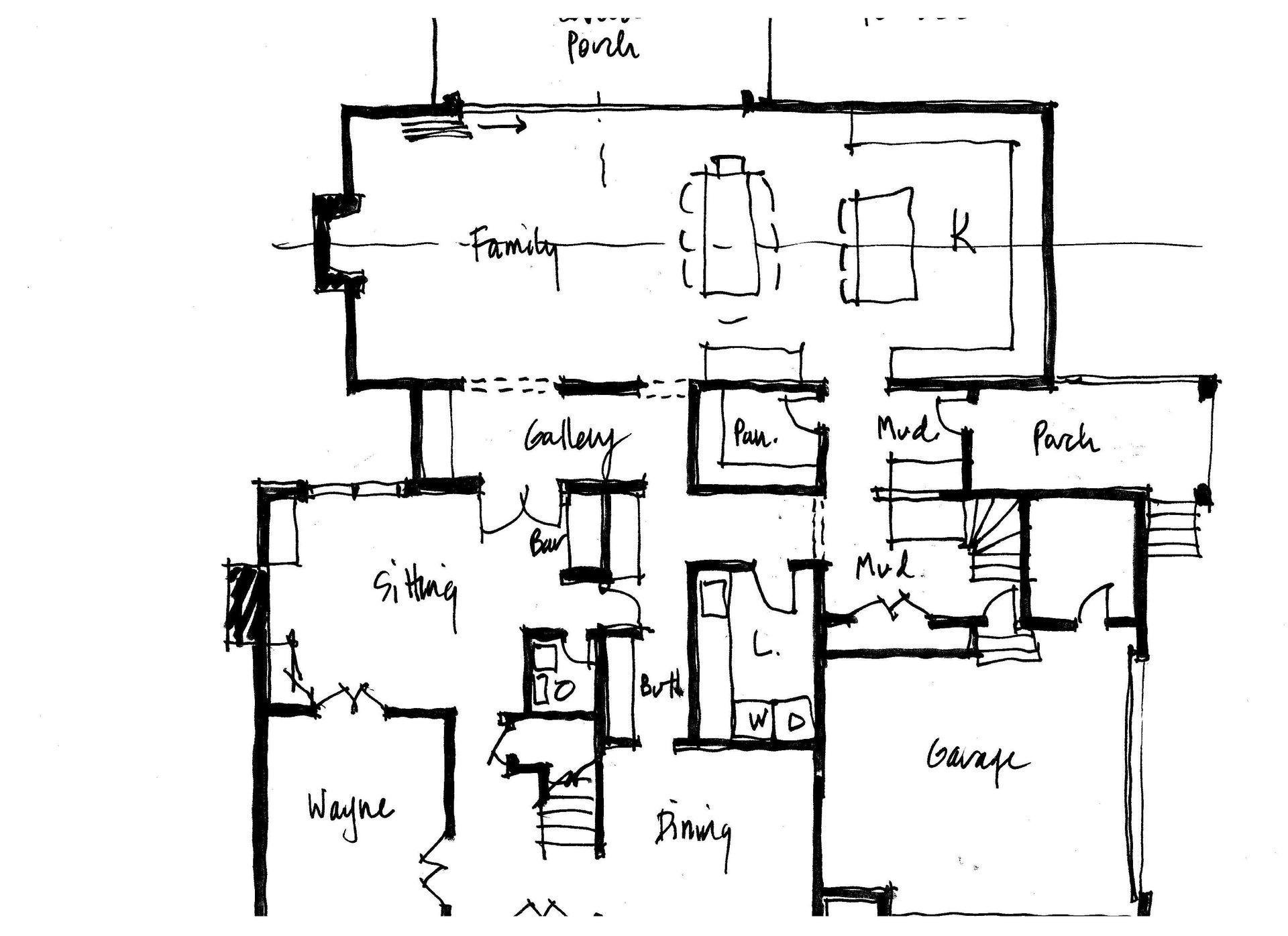
Question 1: Can I add an addition or a porch to this house?
Question 2: Can I add a second or third story to this house?
Question 3: Can I add an attached garage to this house?
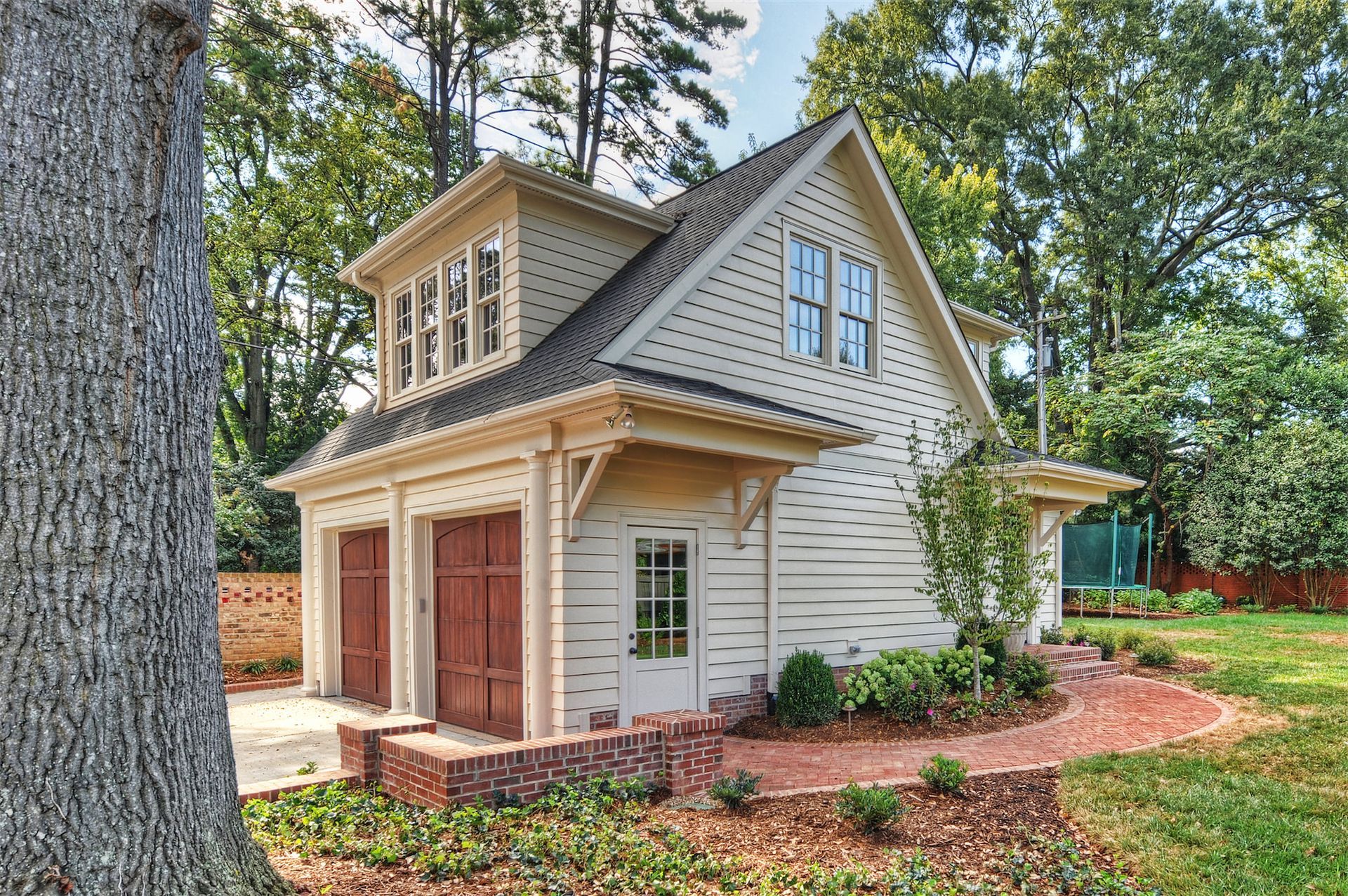
Question 4: Can I add a detached garage or ‘she-shed’ to the property?
Question 5: Can I add a driveway to this property?
Question 6: Can we cut down these trees?
Question 7: Which improvements have to be reviewed by others?
Question 8: Can I put a fence around this yard?
Question 9: Can I build a solid wall at the back of my property?
Question 10: Can I put a duplex or triplex on this property?
Question 11: Can I put a pool on this property?
Some Common Sources for Answers:
- Polaris 3G - Polaris 3G (mecklenburgcountync.gov)
- Charlotte UDO (Unified Development Ordinance) - combines regulations from various ordinances into one document. Includes zoning, subdivision, tree ordinance, streets and sidewalks, floodplain, and soil and erosion control, post construction stormwater regulation, and driveway/access requirements.
- Good index to the UDO - Home | Read The UDO (charlotteudo.org)
- Historic Districts - Historic District - City of Charlotte (charlottenc.gov) Dilworth, Fourth Ward, Hermitage Court, McCrorey Heights, Oaklawn Park, Plaza Midwood, Wesley Heights, Wilmore
- Deed Restrictions - Deed restrictions are limitations on how a piece of real estate can be used and what can be built on it. They are often called “restrictive covenants”. Deed restrictions are essentially contracts that you enter into when purchasing a property. Common deed restrictions include:
- Prohibitions on certain types of businesses
- Restrictions on the height or size of buildings
- Requirements for the maintenance of the property
- Restrictions on the color or type of exterior paint or roofing materials
Search Mecklenburg County Real Estate Records
Neighborhood Covenants/Restrictions/HOAs
- Requirements for the maintenance of the property
- Restrictions on the color or type of exterior paint or roofing materials
- Other restrictions similar to deed restrictions
- A homeowner's association, management company or an individual homeowner may enforce these restrictions
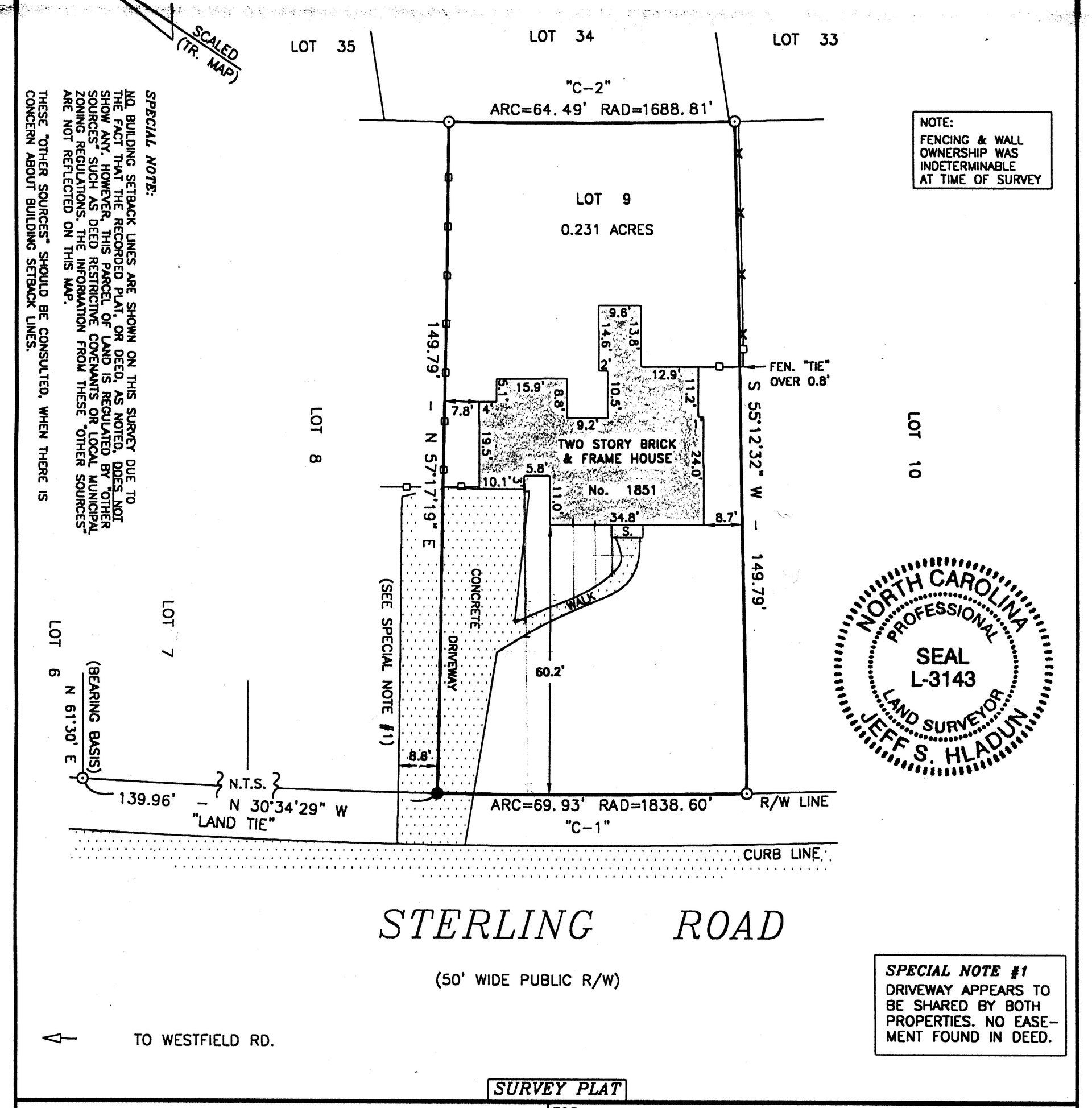
Survey of Property - metes and bounds, topographic
Building Codes - residential and commercial codes describe the requirements for how to construct a building to meet particular standards.
North Carolina Building Codes - ICC Digital Codes (iccsafe.org)
Question 1: Can I add an addition to this house?
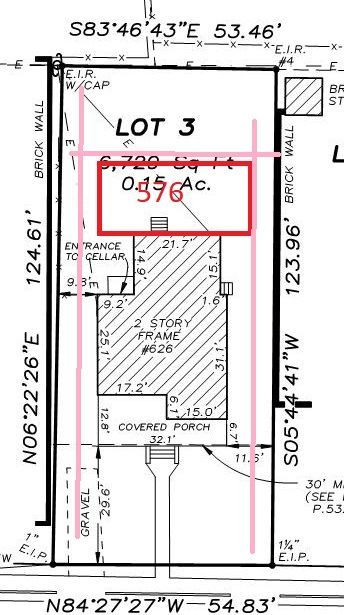
Is there room? Is there any available maximum coverage area? Is there available BUA (Built Upon Area or Impervious)? Will the neighborhood covenants, HOA and/or historic district allow such an addition? Will the zoning setbacks allow enough space for the addition?
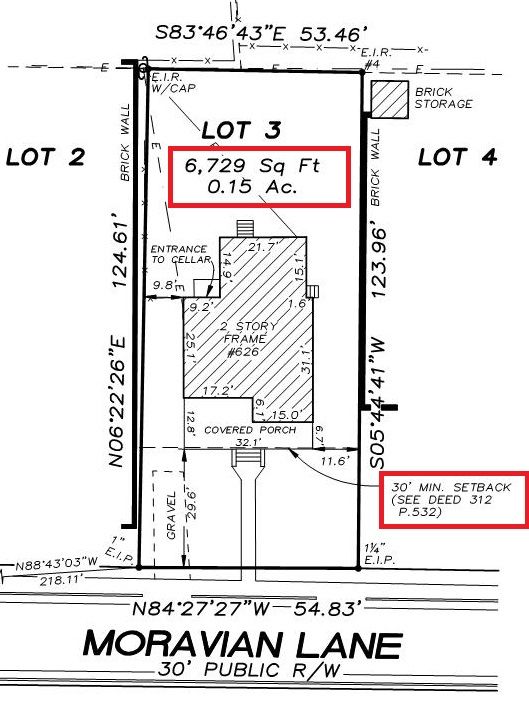
Step 1 - Obtain a survey w/setbacks and deed restricted setbacks. Do not use Polaris (Mecklenburg County GIS) for reliable building size and location on the lot.
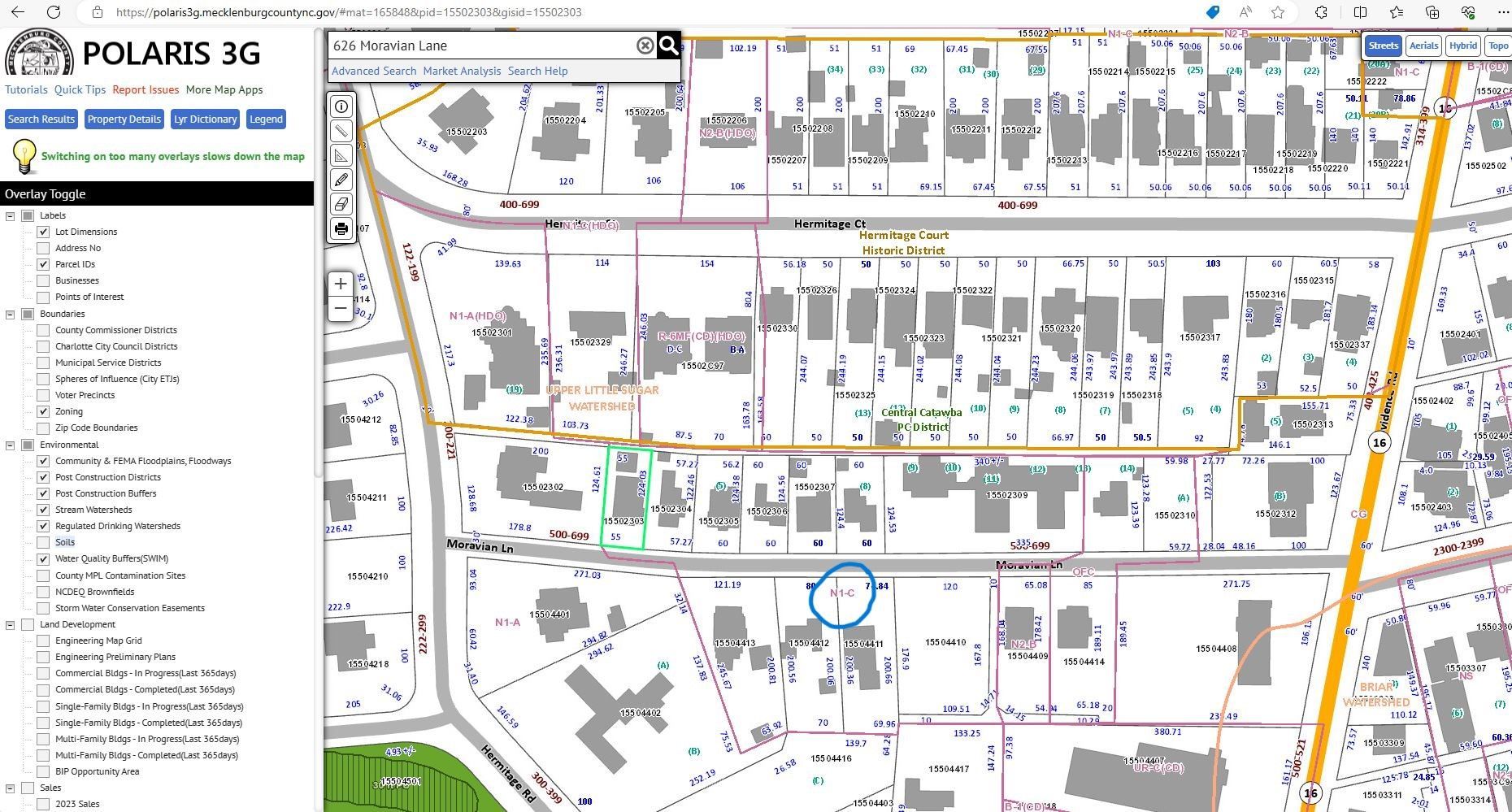
Step 2 - Search Polaris to determine the zoning district.
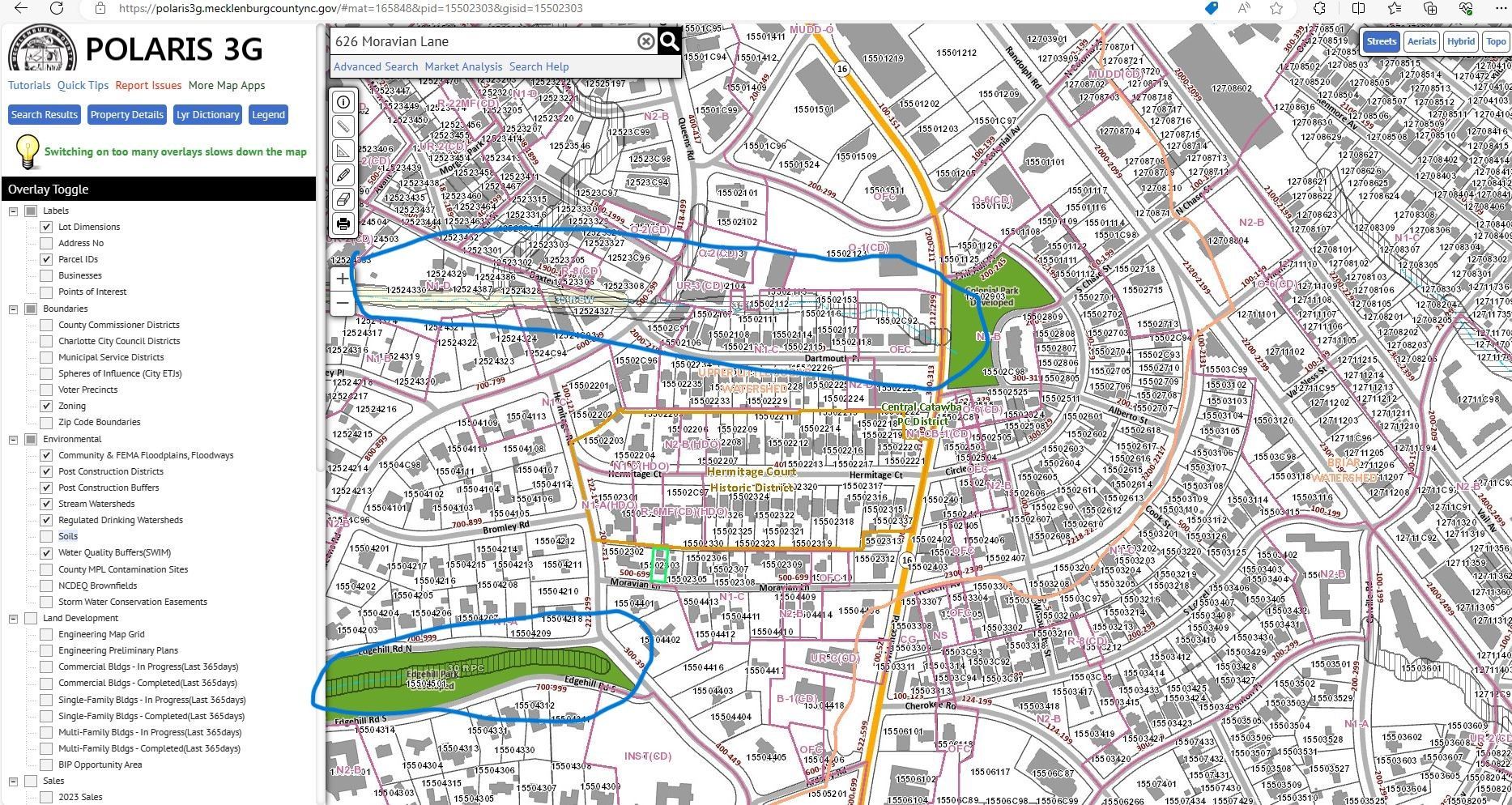
Step 3 - Search Charlotte Unified Development Ordinance (UDO) Home | Read The UDO (charlotteudo.org) to determine setbacks for the property.
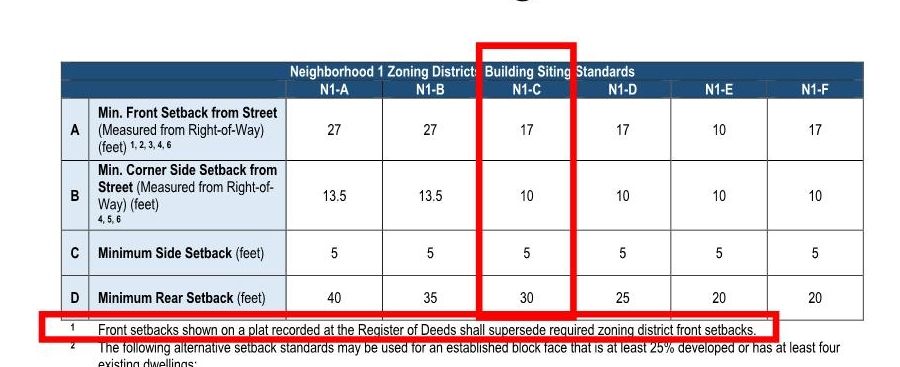
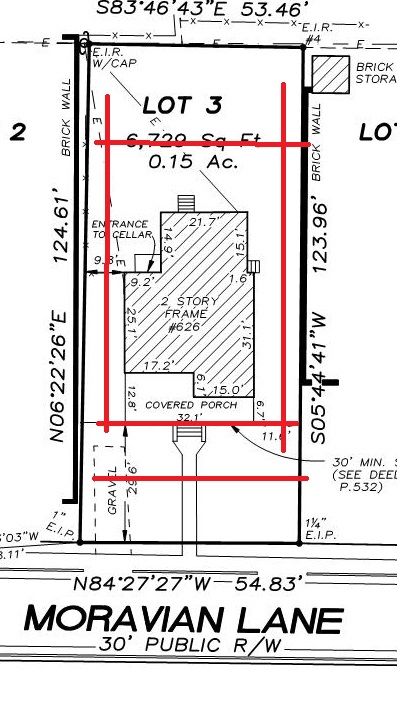
Step 4 - Using Charlotte Unified Development Ordinance (UDO), determine if there is any available Maximum Coverage Area remaining.
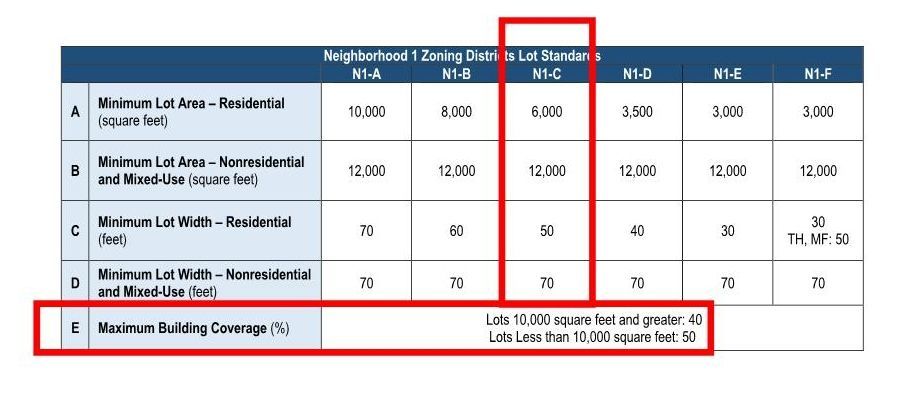
Determine available Maximum Coverage Area (building footprint):
- 6729sf (from survey) x 50% = 3364sf
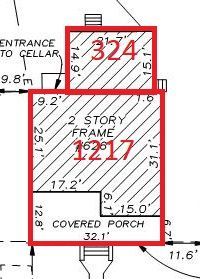
Determine current footprint:
- 1217sf + 324sf = 1541sf
- 3364sf - 1541sf = 1823sf available for new building addition footprint
Step 5 - Using Polaris and Charlotte Unified Development Ordinance (UDO), determine if there is available
BUA (Built Upon Area)
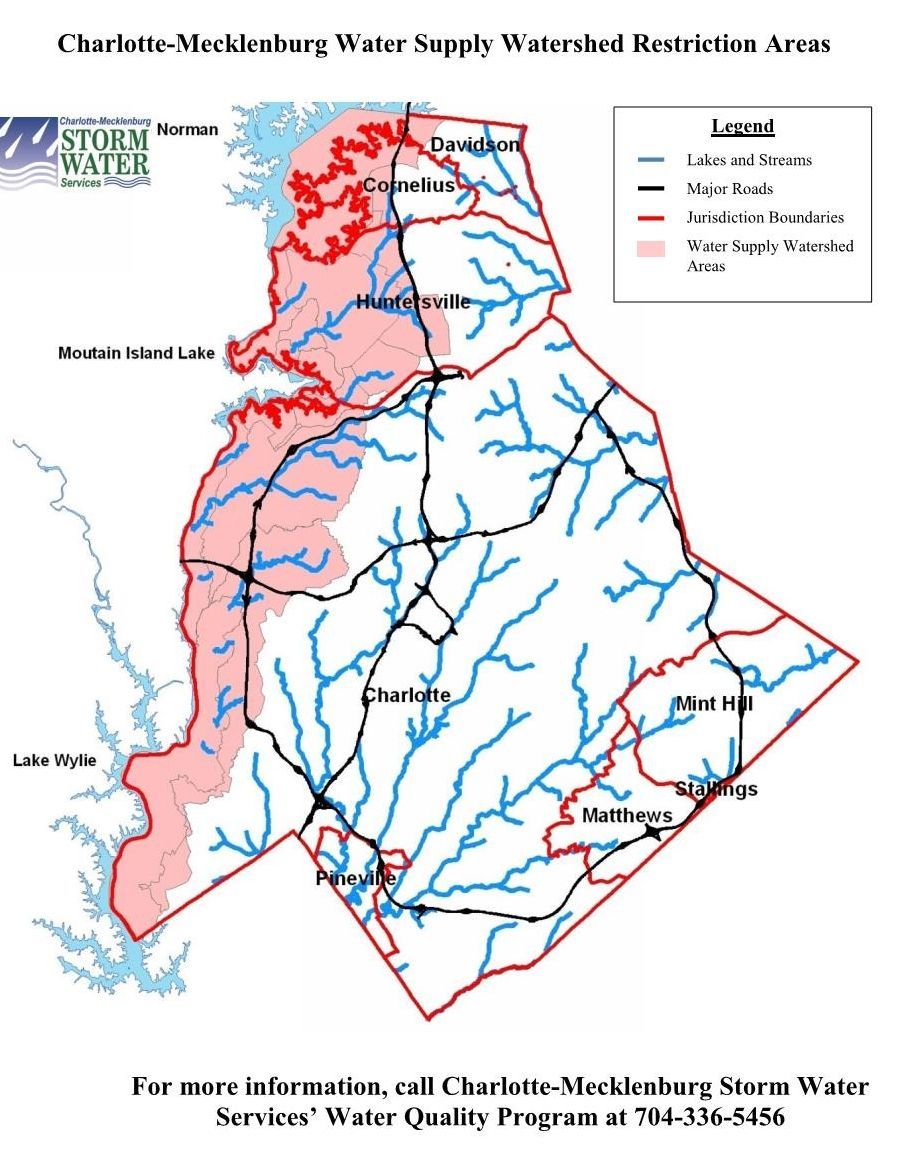
Great source (yet very complicated) for determining BUA:
determiningbua1114.pdf (charlottenc.gov)
Note: Properties developed in the City of Charlotte after July 1, 2008 or properties developed in Cornelius, Davidson, Huntersville, Matthews, Mint Hill and Pineville after July 1, 2007 are likely subject to built-upon area restrictions.
Contact Charlotte Stormwater to inquire about a parcel by calling: 311 or 704-336-7600
Conclusion - an addition is possible as described above. In this case there are no BUA restrictions (impervious), no neighborhood restrictions, no historic district, no HOA and neighborhood design review board. House must comply with zoning regulations and residential building codes.
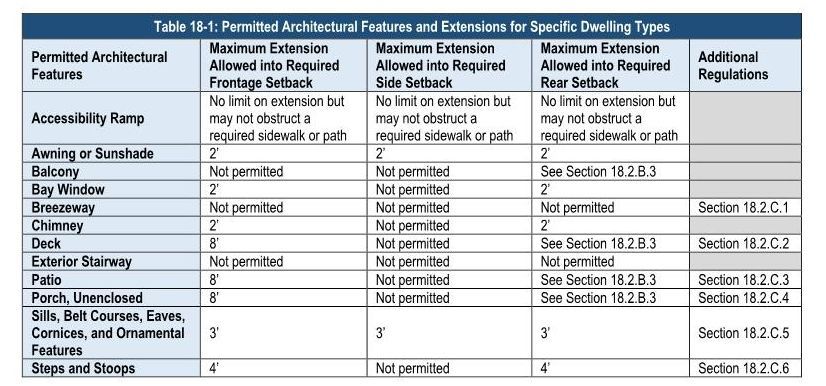
There are certain conditions where a portion of a structure can be built over a setback:
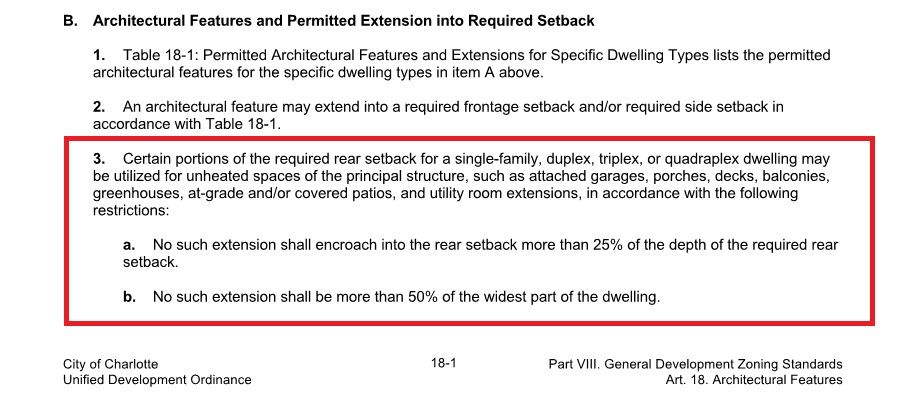
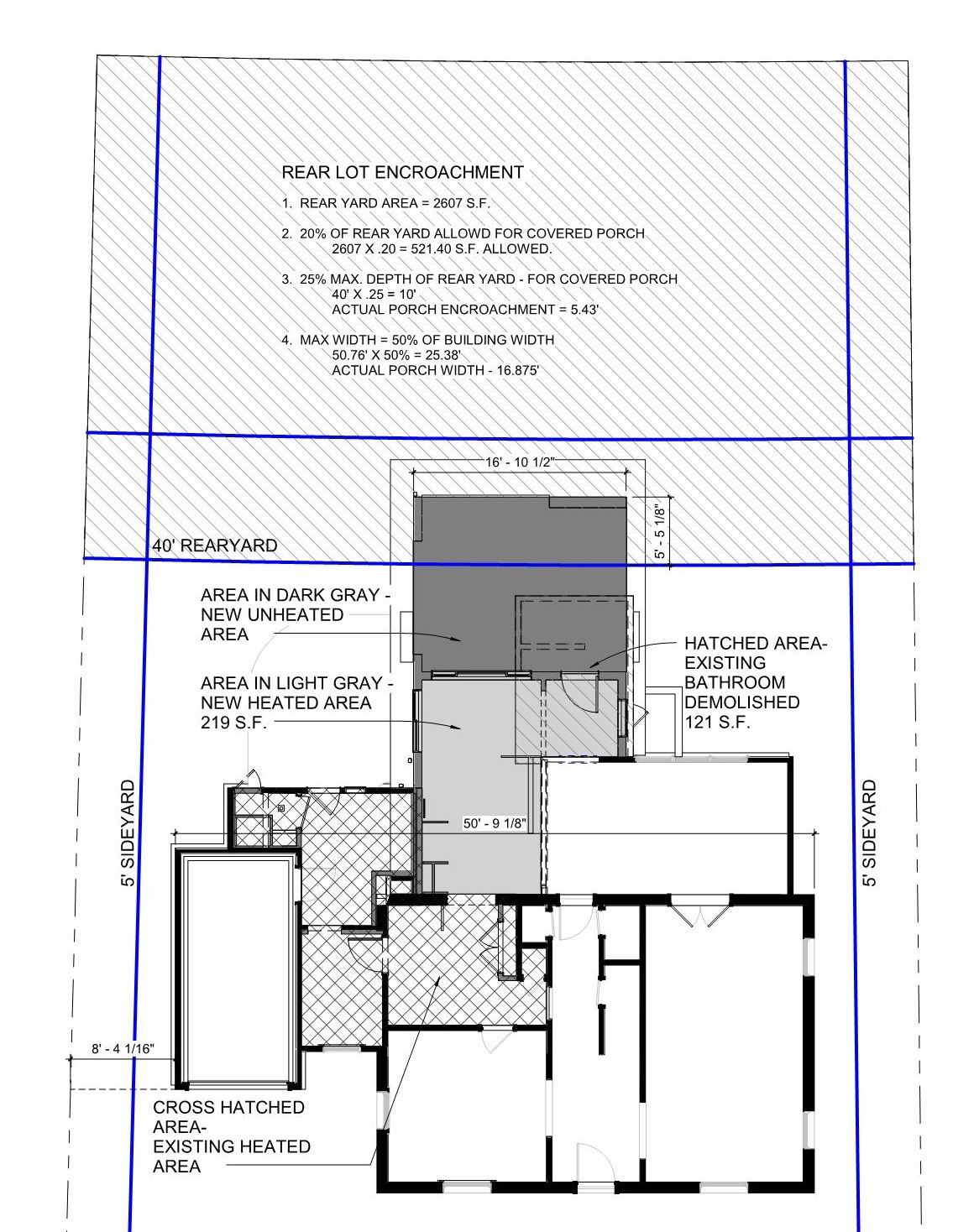
From UDO - page 18-2:
Question 2: Can a second or third story be added to this house?
Step 1 - Check Zoning Code (UDO)
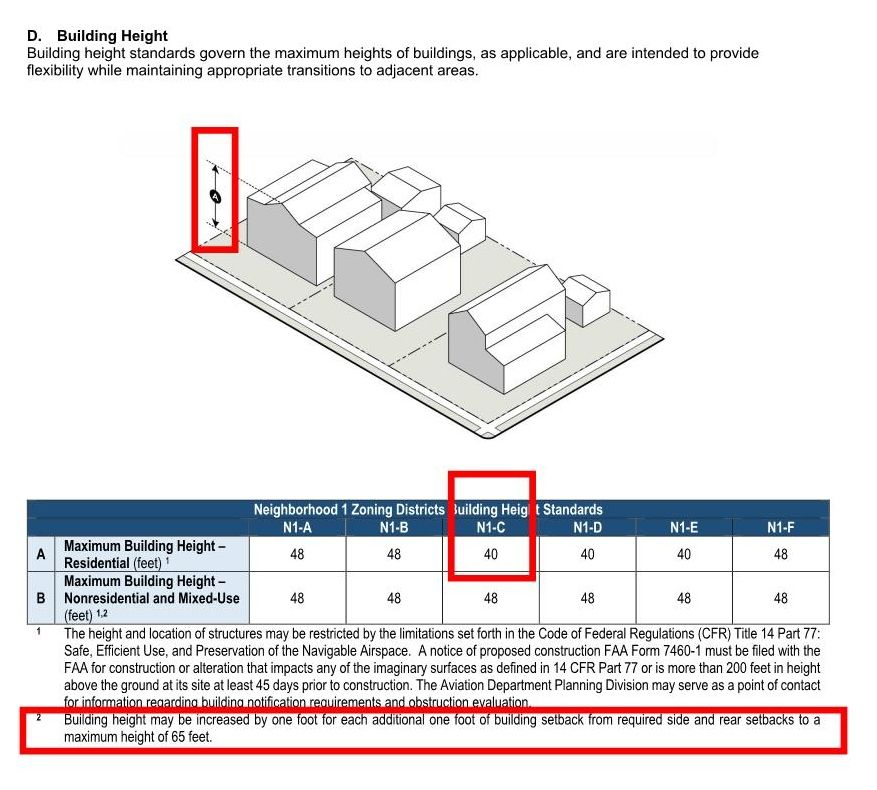
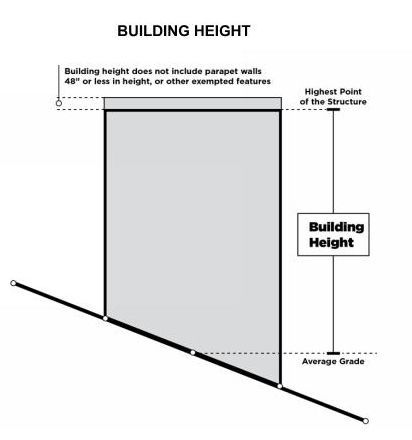
Step 2 - Check building code/structural review.
Need to hire a structural engineer to review the capacity of the existing house to support additional weight. They also need to evaluate the ceiling joists of the upper floor to see if they can support the additional construction and code requirements for floor strength.
Step 3 - Check deed restrictions
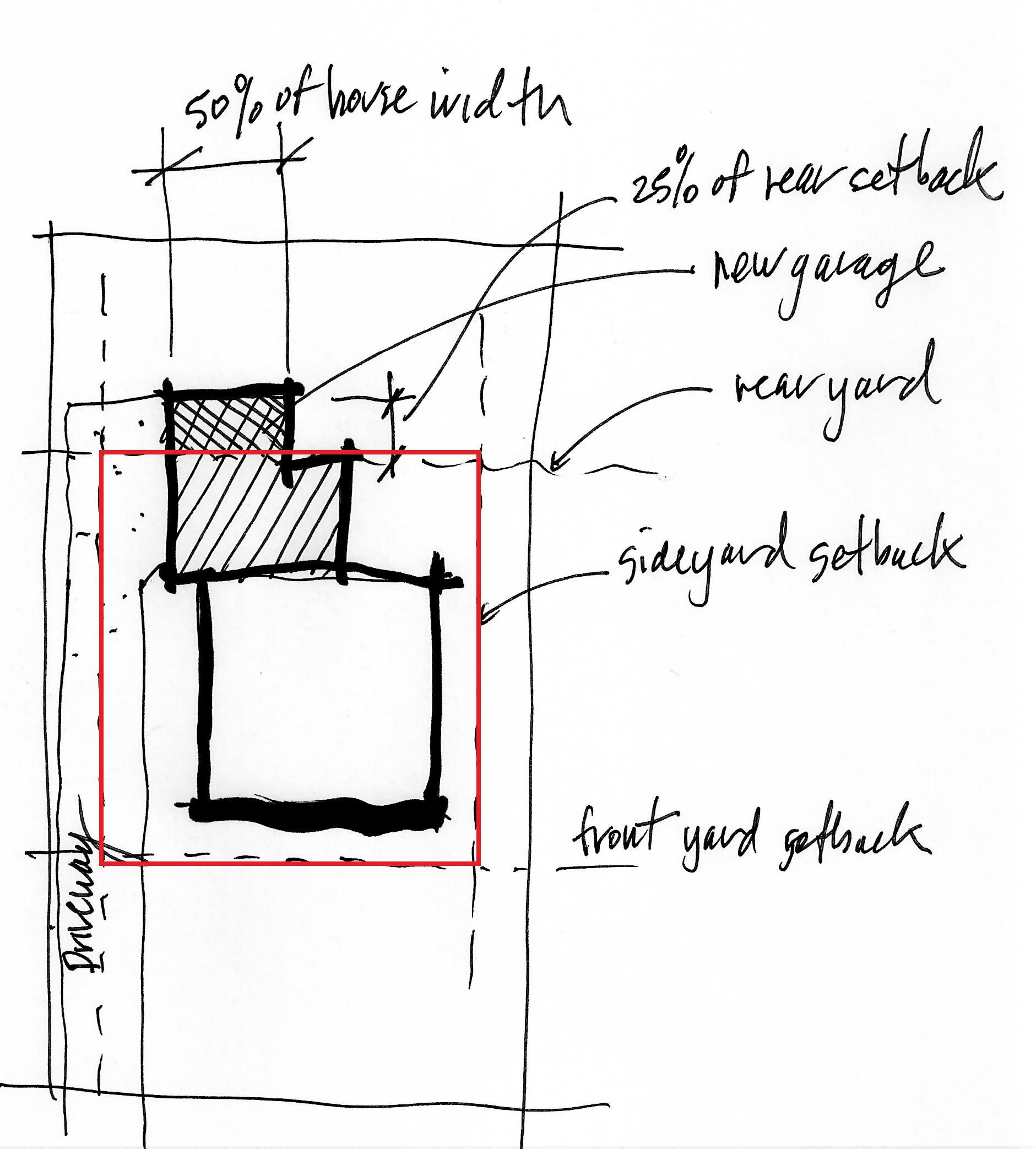
Question 3: Can I add an attached garage to this house?
Step 1 - determine lot coverage calculations (see Question 1)
Step 2 - determine BUA restrictions (see Question 1)
Step 3 - determine if garage will fit
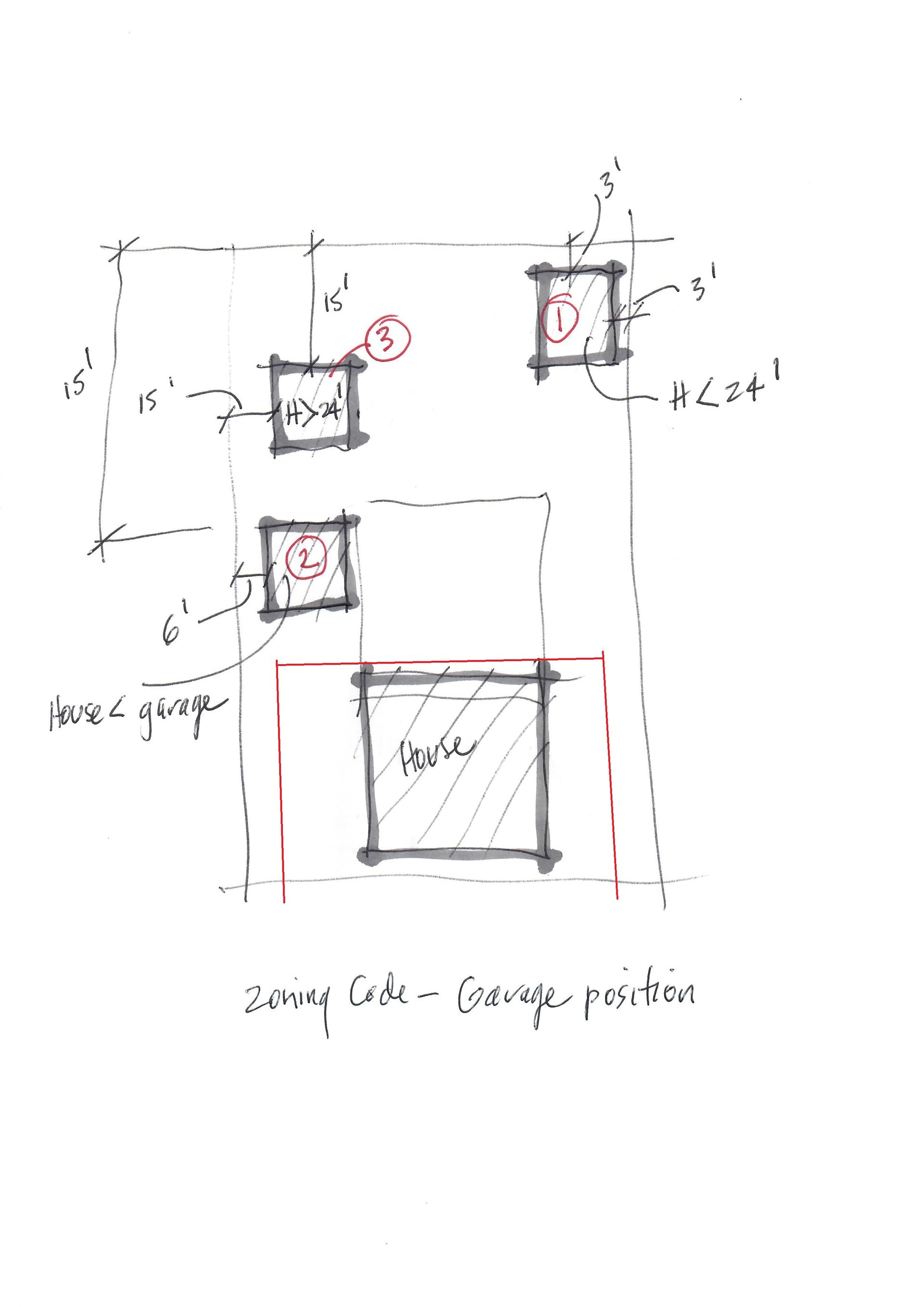
Question 4: Can I add a detached garage or ‘she-shed’ to the property?
See Article 17 Accessory Structures of UDO for additional information.
Accessory Structure definition: A structure located on the same lot as the principal building that is incidental and subordinate to the function of the principal residence. Accessory dwelling unit (ADU) is a subset of accessory structures.
Key rules from UDO:
- No accessory structures in the front yard (there are some exceptions for really big lots).
- Accessory structures may be minimum of 3’ from property line (however, not a good idea)
- Accessory structures are better if under 24’ tall.
- If higher than 24’, they must be 15’ from property lines.
- For lots in residential use, the cumulative square footage of all accessory structures on a lot shall not exceed the total square footage of the heated area located on the first floor of the principal structure. Accessory structures open to the sky such as, but not limited to, pools and tennis courts, do not count towards this square footage limitation.
Advantages -
- Detached structures allow more area on which to build.
- A good way to add space to a house that is otherwise hard to add onto.
- By pulling the structure away from the main house, the main house floor plan will dramatically improve.
- Detached structures provide physical and mental separation.
Other considerations:
- To ensure adequate power line clearance, check with Duke Energy.
- To connect a detached structure to the main house, add a breezeway.
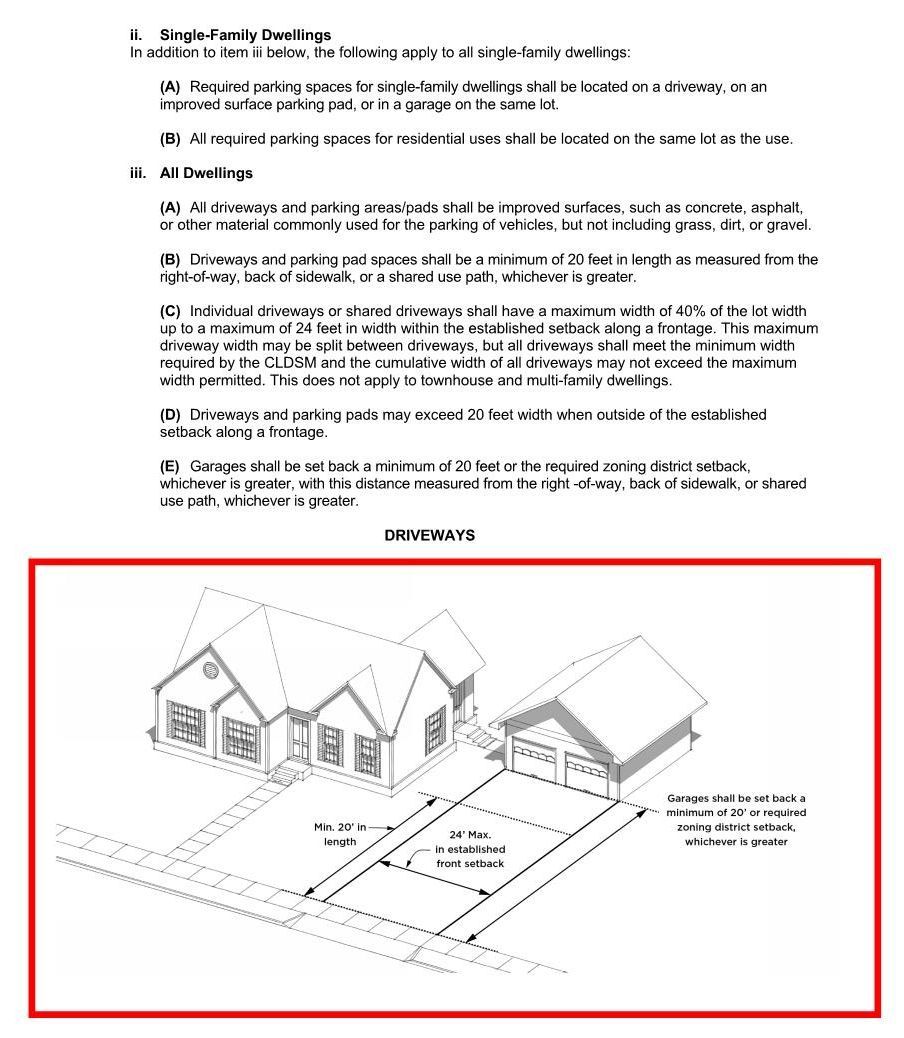
Question 5: Can I add a driveway to this property?
Step 1: Check BUA (Built Upon Area or impervious)
Question 6: Can we cut down these trees?

Key Takeaways:
- Heritage Trees – Regulations pertaining to Heritage Trees (native species, 30” in diameter at 4 ½’ mark) follow two different ordinances. For Heritage Trees on a lot that is undergoing development, the new UDO is triggered. For Heritage Trees on private property, the Charlotte Tree Ordinance is the place to go. An authorized removal of a Heritage Tree is $1500 along with planting a replacement tree that is a minimum of 6’ tall and 2” in caliper. Penalties for unauthorized removal are still in the works.
- Trees in the ROW are considered City Trees and are protected as such. Charlotte Explorer offers views of lot lines and ROW distances to judge whether a tree is in the City’s or NCDOT ROW. Authorized removal of a City Tree is $200, while unauthorized removal has a penalty of $300 (per Laurie Reid, this has been the ordinance for City Trees since 2019 and remains unchanged with the new UDO).
- As of June 1st – posted signage for Tree Protection Zones will be required.
- Staffing has been in flux, but Urban Forestry has added two additional staff members (creating a 4-person team) to help with plan review. You can find a checklist (attached and link below) on the Charlotte Development Center website which helps builders/developers understand the different components needed for submittal. Review times for second round of comments and beyond are the same as the initial review time (10 business days).
- Contiguous tree ordinances under the UDO have proven to have unintended consequences. A text amendment should be available for review in one week.
Link to Stormwater and Urban Forestry Checklists: https://charlotteudo.org/residential-reviews/
Question 7: What kinds of improvements to the property have to be reviewed by others?
Examples of residential projects now requiring City Storm Water and Urban Forestry review:
- Construction of a new Single-Family Home
- Construction of a new Duplex
- Additions to existing residential buildings, or renovations that expand the footprint
- Detached garages
- Backyard storage buildings
- Accessory Dwelling Units (ADUs)
- Retaining walls on residential lots
- Pools
- Installation, modification, creation, or connection to the existing City storm drainage system
- Installation of storm drainage systems that convey runoff from a publicly-maintained street
Why is all of this regulation occurring? Significantly more is being built on each lot than in years past. Margin for error is smaller, and construction on any given lot has much more of an impact on the neighboring lots.
My advice - recommend that your clients contact the City with any improvements they want to make to their property. Make no changes to a property without a permit. (Except for adding trees and shrubs).
Currently there are methods available to compare aerial footprints and detect changes that could lead to questions about permitting and compliance.
Records for permits are now much easier to obtain, verify and search than in years past.
Question 8: Can I put a fence around this yard?
Neighborhood 1 Zoning Districts, Neighborhood 2 Zoning Districts, and MHP Zoning District Standards
The following standards apply unless a different standard is required by the landscape regulations of Article 20:
- A fence or wall located in the established front setback or setback along a frontage shall be limited to a maximum height of five feet above grade.
- A fence or wall located in the established side setback between the established front setback and established rear setback shall be limited to a maximum height of six feet above grade.
- A fence or wall located in the established rear setback shall be limited to a maximum height of eight feet above grade.
Article 17. Fences and Walls | Read The UDO (charlotteudo.org)
Question 9: Can I build a solid wall at the back of my property?

Answer: Yes, but it must not block water flow. Therefore, the wall may need to have holes that allow water to drain.
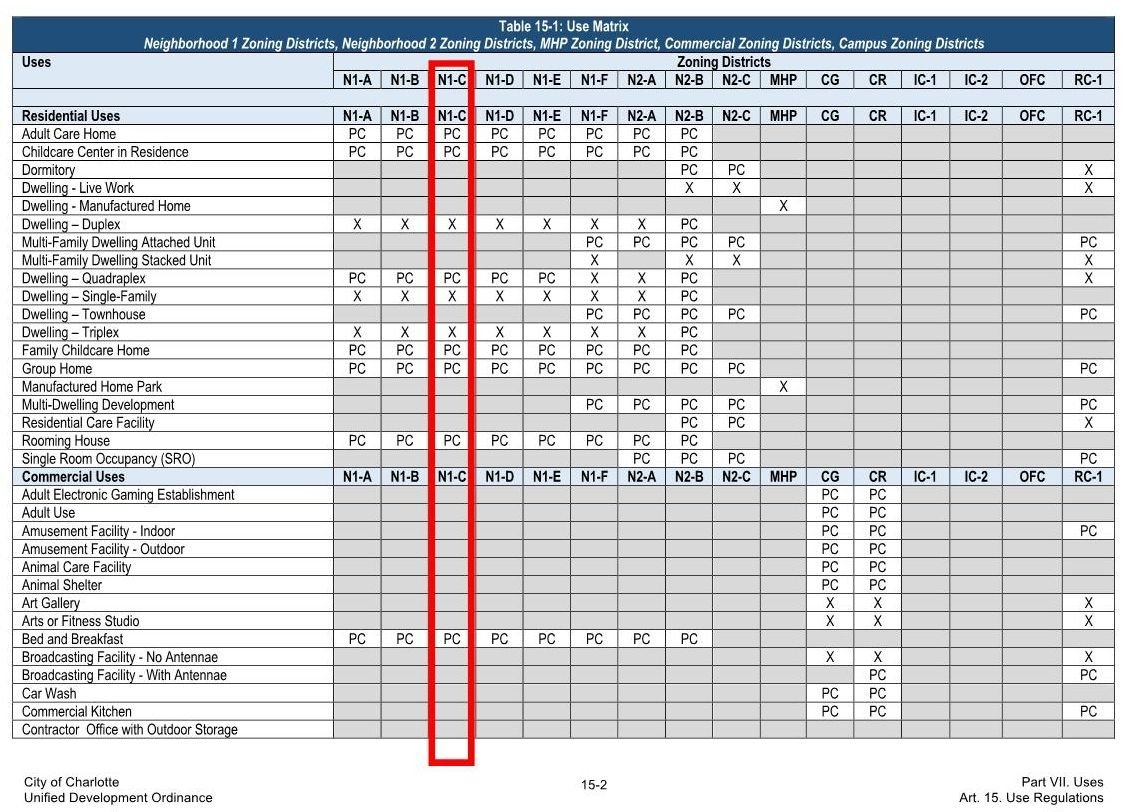
Question 10: Can I put a duplex or triplex on this property?
Step 1: Check the deed restrictions/HOA, etc.
Step 2: Find the parcel on Polaris to determine the zoning district.
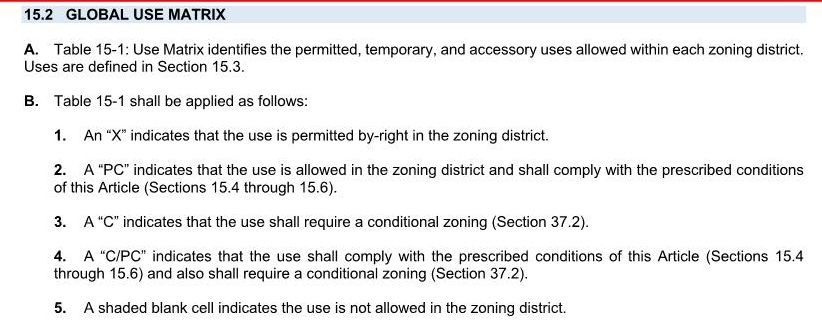
Step 3: Refer to the UDO Table 15-1: Use Matrix
Question 11: Can I put a pool on this property?
Step 1: Check deed restrictions/HOA, etc.
Step 2: Check BUA (Built Upon Area) - note, this is not a building coverage question, but just an impervious question. Water surface does not count towards the impervious area.
Step 3: Apply to Mecklenburg County Health Department for approval and submit pool design.
Pools | Public Health (mecknc.gov)